Self Care is not always bubble baths and manicures.
Self care is learning practices unique to your way of experiencing life that support your nervous system regulation and energy regeneration. Self care is how you tend to your energy situationally and environmentally. There are some spaces and interactions we may not always have control over all the time. Self care is knowing what you need to do for yourself so that you can show up as your best, most present self in the moment. Not your perfect self, not the self that you think everyone wants you to be, nor your idealized self that your nervous system may not be able to actualize in that moment. The practices below are on the spot things you can try to be mindful of what’s happening on the inside for you and what you can do to stay centered, present and make informed, conscious and kind choices for your self and others moment by moment.
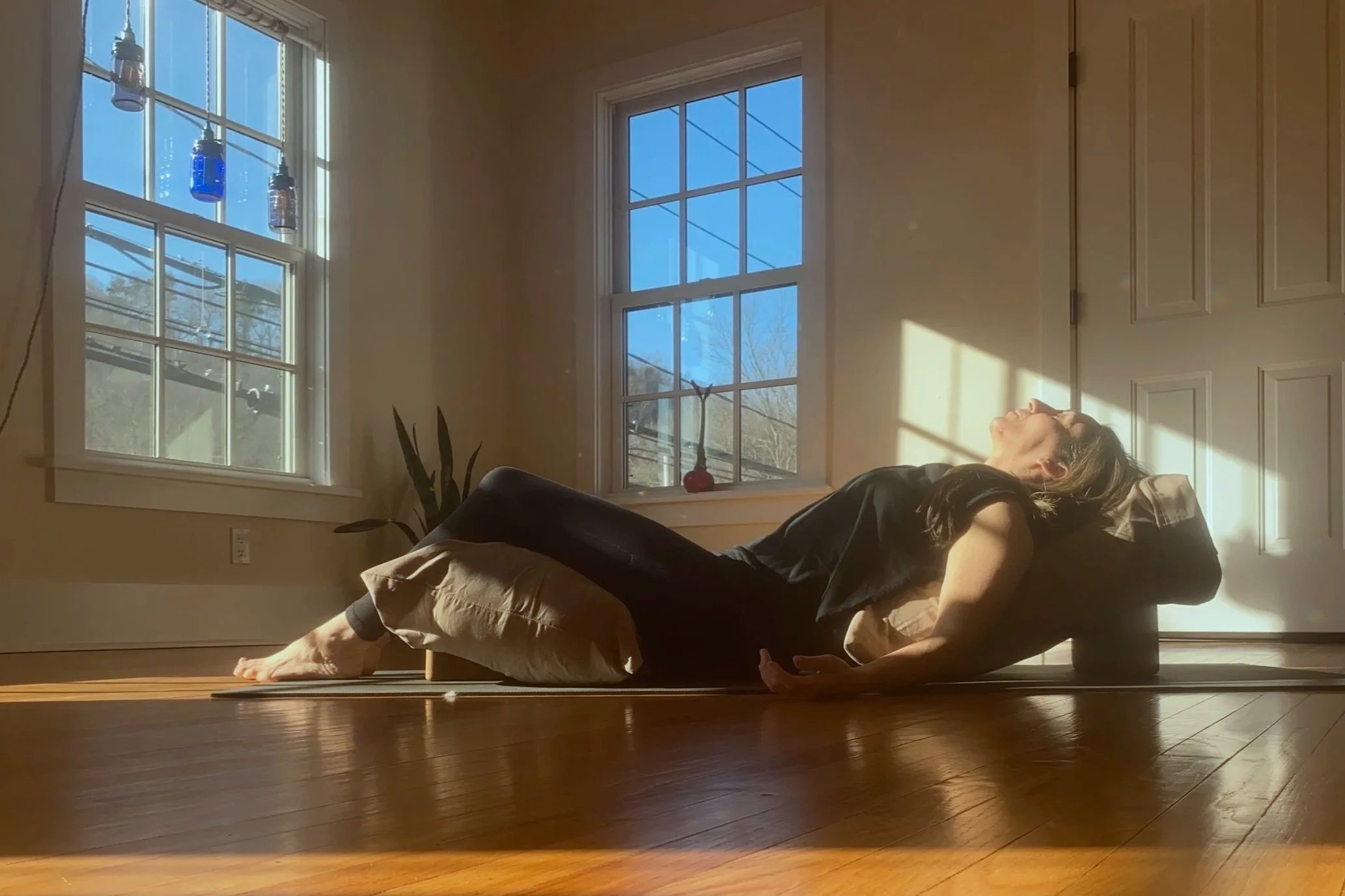
Restorative yoga is one practice that you can do at home. Laying back with your legs slightly elevated and your arms resting, palms face up,
Everyday Self-Care That Actually Sticks
(How Simple Habits Can Build a Calmer, More Resilient You)
Most people think self-care means bubble baths or a full yoga class — but real self-care is often much simpler. It’s about creating tiny pauses in your day that help your body and mind feel safe, steady, and connected again.
Our nervous system — the part of us that handles stress and calm — doesn’t always need big changes. It just needs small moments of attention. Each time you slow down, breathe, or move with awareness, you’re teaching your body that it’s okay to relax. Over time, these little things add up and make you more resilient, patient, and peaceful — even on hard days.
Here are a few easy ways to start:
Pause before you walk inside.
When you come home or walk into work, stop for just one breath before you open the door. Feel your feet on the ground, take a slow inhale, and exhale any tension. This quick reset tells your body you’re shifting spaces — and helps you bring more calm energy inside.
Listen to one song before your day begins.
Before rushing into emails or errands, sit in your car and play a song that makes you feel grounded. Notice the beat, the lyrics, the rhythm. Let it wash over you. Music helps regulate your mood faster than almost anything else.
Stretch your shoulders.
When you feel tight or stressed, roll your shoulders back a few times or interlace your fingers behind you and gently open your chest. Take one big breath in. That’s it. This simple move helps release tension and signals your body that you’re safe.
Find one mindful moment.
When you sip your tea, take a shower, or wash your hands, slow down for ten seconds. Feel the warmth, smell the soap, notice the water. This is mindfulness — being fully in the moment without needing to change anything.
None of this has to be perfect. You don’t need a yoga mat, quiet room, or fancy tools. Just moments of kindness toward yourself, practiced again and again. Over time, those small, caring choices become the foundation of a steadier, more peaceful nervous system — and a calmer, happier you.
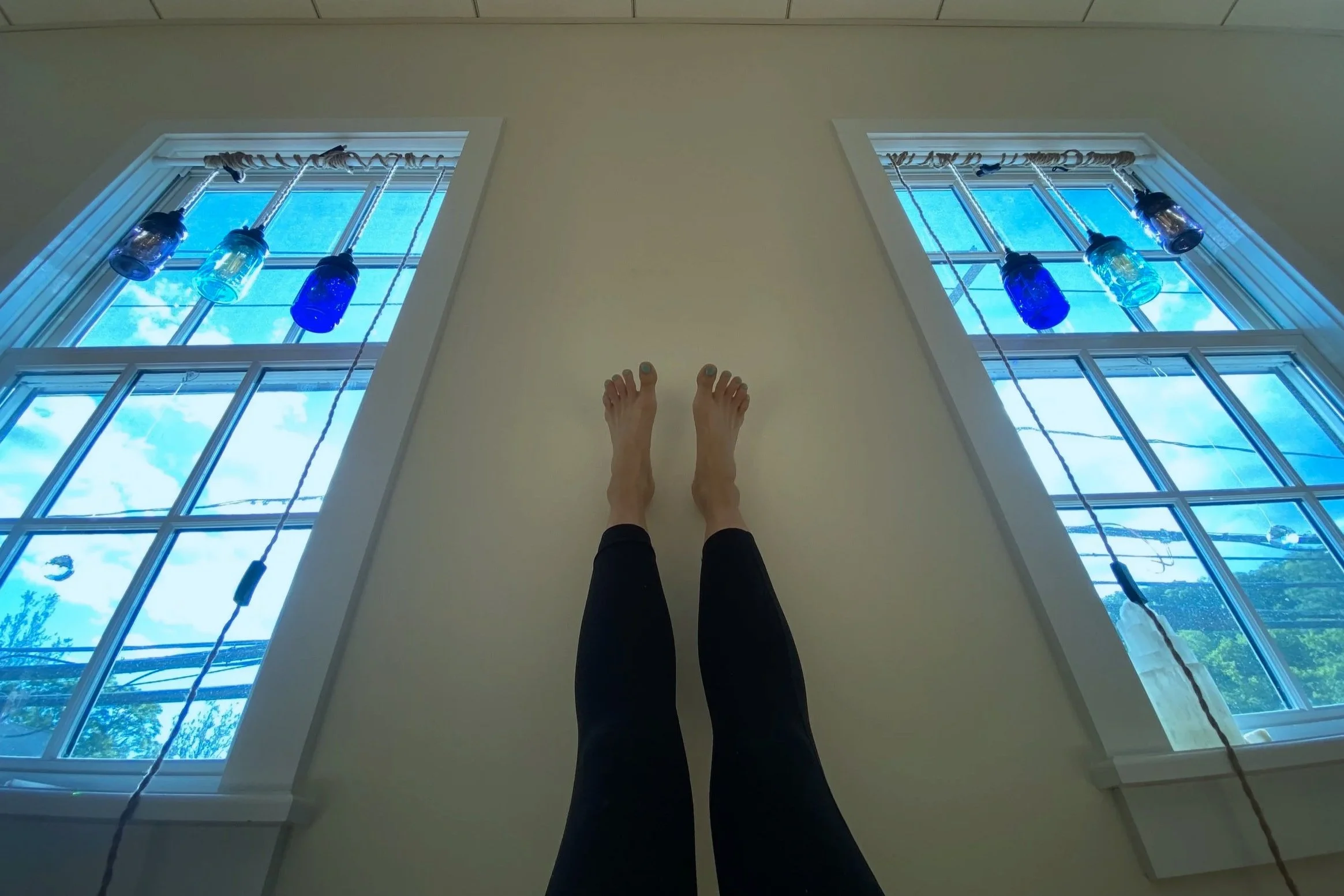
If you have an open wall at home, lay on the floor with your seat a comfortable ways away from the wall and gently rest your feet on the wall, sometimes placing a pillow or blanket under your back or neck and head. “Legs up the wall” pose s a fantastic self care technique to reset your mind, relax your legs and back and shift your attitude.
Taking time to support your nervous system is a gift you give to the world. Practicing the pause is a game changer.
We’ve all seen (or have possibly been) that person losing their patience with the cashier at a store. Logically we know they can’t do anything about whatever the issue at the register is, but emotionally an outburst erupts. It’s painful to watch and for a reflective person, it’s painful to know that your impatience and inability to regulate your nervous system poured out and ruined an innocent persons day. We prevent this from happening when we check in. Do you have the “window of tolerance” to handle the store right now? If you don’t have a choice and you have to get whatever it is inside, how can you buffer your body, mind and heart so that you can walk in, get what you need and exit with harm to none, including yourself. If you can practice that pause and what’s at the store can wait until you are in a better headspace or have the physical energy/tolerance for possible stress, this is also self care and using the front of your brain to plan for what your nervous system can handle.