Our Top Yoga Workouts for Your Core
Your core and your low back are best friends. Your posture is also a direct reflection of your core strength.
Below are some adaptive practices to get you started on your journey to strengthening your core muscles. Most of us think of the flashy 6 pack abs you may see in magazines or online, but deeper to that is a band of muscle called your Transverse Abdominus. The TVA is your deepest abdominal muscle and protects your organs in the front as well as wrapping around your waist and low back. Even if you have a little “softness” in your “front body” as we affectionately call it, you can still strengthen and develop profound support for your back and posture by learning how to work your TVA. The exercises offered below are just suggestions and a general rule of thumb is only do what feels safe, supportive and comfortable/accessible to your body and unique physique at this particular time.
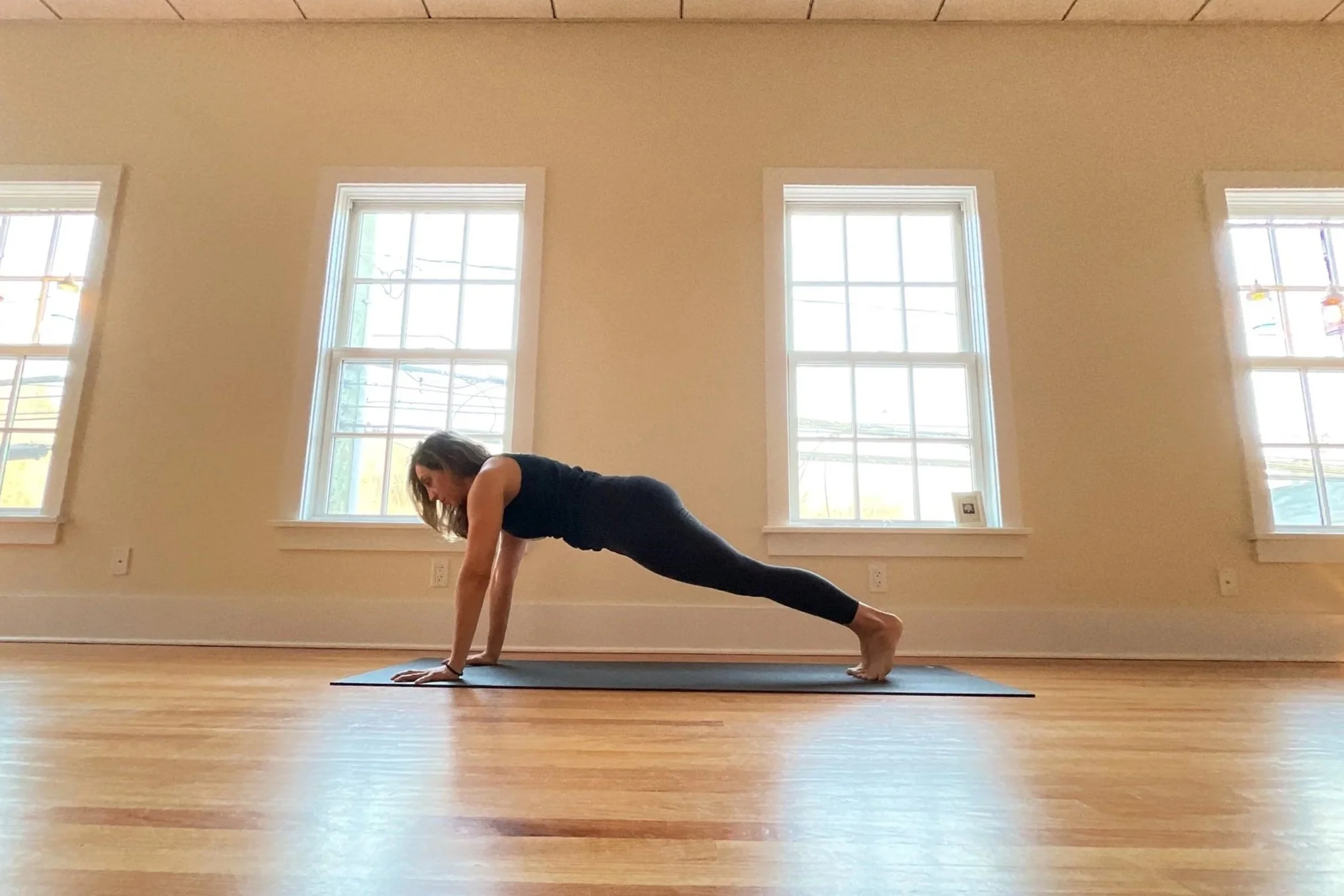
Planks may be a goal, but think out of the box! There are many ways to get the benefits of this pose beyond the classic interpretation!
1. Seated Core Engagement
You don’t need to get down on the floor to strengthen your core — you can do it sitting in a sturdy chair. Sit tall, feet flat, spine long. Take a breath in, then as you exhale, gently draw your belly button in toward your spine (as if zipping up a snug jacket). Hold for a moment, then release. Try 5–10 rounds. This simple movement wakes up your deep core muscles without any strain on your wrists or knees.
2. Standing “Chair” Pose Variation
Stand with your feet about hip-width apart, arms by your sides. As you inhale, lengthen your spine; as you exhale, bend your knees slightly as if you’re about to sit in a chair behind you. Keep your weight in your heels and your chest lifted. Hold for a few breaths, keeping your belly gently engaged. You’ll feel your thighs, glutes, and core working together — all without needing to get down on the mat.
3. Wall Press for Core and Balance
Stand facing a wall, about arm’s length away, and place your palms flat against it. Without locking your elbows, press your hands gently into the wall while pulling your belly in. You’ll feel your shoulders stabilize and your abdominal muscles engage. If comfortable, lift one heel slightly, then the other, to add a light balance challenge. This helps build strength through your midsection and improves posture while being easy on joints.
4. Seated Twist
Sit tall in a chair with your feet planted. Inhale to lengthen your spine; as you exhale, slowly twist your torso to one side, holding the chair arm or seat gently for support. Keep your shoulders relaxed and your hips facing forward. Breathe here for a few counts, then come back to center and switch sides. Twisting helps tone the waist and strengthen the oblique muscles while encouraging healthy digestion and spinal mobility.
5. Reclined Core Activation (Bed or Couch Friendly)
If you prefer lying down, you can do this on your back on a firm bed or couch. Bend your knees and plant your feet. Inhale to prepare, then exhale as you lift one foot an inch or two off the surface, keeping your belly gently pulled in and your lower back supported. Lower it back down and switch sides. This gentle marching motion engages your lower abdominals and improves stability without putting any pressure on the wrists or shoulders.
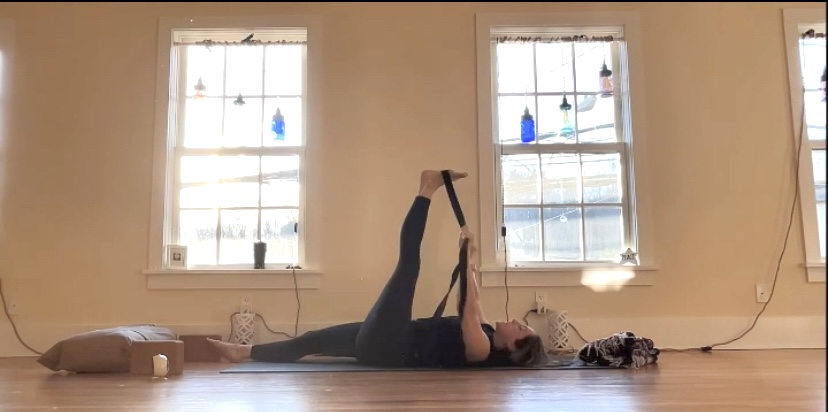
Using a strap around the feet can be a great tool as you learn to work on your core strength on the floor.
These small, mindful movements can make a big difference — especially when done consistently with awareness and breath.
They’re safe, supportive ways to reconnect with your core strength, even on days when traditional poses don’t feel accessible. Try one set at a time, see how you feel. As you grow more comfortable and practice daily you’ll be able to add more reps or sustain these poses for longer amounts of time. The goal is to feel strong, not to beat the clock or strive. Slow, mindful core engagement with good mechanics, alignment and focus is the way to go. Even 1 minute makes a difference! Go slow, focus on being present, notice how your body makes wise adaptations to each variation depending on how you feel each day!